
Ozone IV Therapy in Toronto: Benefits, Safety & What Science Says
Quick Answer
Ozone therapy uses medical-grade ozone (O3) to stimulate the body's natural healing and immune responses. At VCIM in Toronto, ozone treatments — including 10-Pass, MAH, ozonated saline, prolozone, and insufflations — are administered under physician supervision as part of a comprehensive treatment plan. Sessions vary from 30 minutes to 1 hour depending on the protocol. Book a consultation to find out if ozone therapy is right for you.
Ozone therapy is one of the most talked-about — and most misunderstood — treatments in integrative medicine. Medical-grade ozone (O3) has been used therapeutically in Europe for over a century. At the Village Centre for Integrative Medicine (VCIM) in Toronto, ozone therapy is offered as a physician-supervised treatment for patients dealing with chronic infections, autoimmune conditions, post-viral fatigue, and other complex health concerns where conventional approaches alone have been insufficient.
We believe patients deserve honest, balanced information — especially about therapies where the evidence is still evolving. This guide explains what ozone therapy is, how it works, what the current research shows, and how VCIM approaches it differently from other clinics. Explore our full range of IV therapy services in Toronto → to see how ozone fits into your health plan.
What Is Medical Ozone Therapy?
Medical ozone therapy introduces a controlled dose of ozone gas (O3) — a molecule made of three oxygen atoms — into the body to stimulate oxidative stress responses that activate the immune system and enhance cellular repair. Unlike the environmental ozone in smog, medical-grade ozone is produced on-site using specialized generators that convert pure medical oxygen into a precise ozone-oxygen mixture.
The therapeutic concept is based on a principle called oxidative preconditioning: when administered at controlled, low concentrations, ozone triggers a mild oxidative stress that activates the body's own antioxidant defence systems — including superoxide dismutase, catalase, and glutathione peroxidase. A 2017 review published in Medical Gas Research described this mechanism as an "adaptive response" that helps the body manage inflammation, improve oxygen utilization, and support immune function.
Ozone therapy has been practised in clinical settings since the early 1900s, with extensive use in Germany, Italy, Spain, and Cuba. In Canada, ozone therapy is available through licensed physicians and, in some provinces, naturopathic doctors with advanced training. At VCIM, ozone treatments are administered under physician supervision, ensuring clinical safety standards are maintained.
Types of Ozone Therapy Available at VCIM
VCIM offers five distinct ozone therapy modalities — 10-Pass, MAH, ozonated saline IV, prolozone joint injections, and insufflation — each delivering medical-grade ozone through a different route and intensity level to address specific clinical needs. Your treatment team will recommend the appropriate protocol based on your health assessment and treatment goals.
10-Pass (High-Dose Ozone Autohemotherapy). The 10-Pass protocol is the most intensive form of ozone therapy available. A small volume of blood is drawn, mixed with a precise concentration of medical-grade ozone under hyperbaric pressure, and reinfused — repeating this cycle up to 10 times in a single session. This protocol delivers a substantially higher ozone dose than standard autohemotherapy and is typically reserved for patients with chronic infections, Lyme disease, autoimmune conditions, or complex chronic illness. Sessions take approximately 60–90 minutes.
MAH (Major Autohemotherapy). MAH involves drawing approximately 100 mL of blood, mixing it with ozone ex vivo, and reinfusing it into the bloodstream. It is the most widely studied form of systemic ozone therapy, with research published in Frontiers in Medicine demonstrating clinical improvements in patients with post-acute COVID-19 sequelae. Sessions typically take 45–60 minutes.
Ozonated Saline IV. Medical-grade ozone is dissolved into sterile saline solution and delivered intravenously. This protocol offers a gentler systemic ozone exposure and is often used for patients who are new to ozone therapy or who require a less intensive approach.
Prolozone (Joint Therapy). Prolozone combines ozone gas with a mixture of anti-inflammatory agents and nutrients, injected directly into damaged or painful joints. A 2021 randomized clinical trial published in Evidence-Based Complementary and Alternative Medicine found that ozone prolotherapy produced significant improvements in pain and function in patients with knee osteoarthritis. Prolozone is commonly used for arthritis, joint pain, sports injuries, and degenerative disc conditions.
Insufflation (Rectal, Sinus, Ear). Ozone gas is introduced through body cavities — most commonly rectal insufflation — as a non-invasive method of systemic ozone delivery. Research suggests rectal insufflation achieves approximately 30–40% of the systemic absorption of IV methods, making it a practical option for patients who prefer to avoid intravenous procedures or as a maintenance protocol between IV sessions.
Conditions Where Ozone Therapy Shines
Ozone therapy is most commonly used for chronic infections, post-viral fatigue, autoimmune conditions, musculoskeletal pain, and circulatory support — particularly in patients with complex conditions that have not responded fully to conventional treatment alone. Based on VCIM's clinical experience and the available research literature, the following conditions represent the primary applications for ozone therapy at our clinic.
Chronic infections and tick-borne illness. Ozone has demonstrated antimicrobial properties in laboratory studies. In clinical practice, high-dose ozone protocols like 10-Pass are used alongside conventional antimicrobial therapy for patients with Lyme disease, chronic viral infections (EBV, Herpes), and recurrent bacterial infections. A 2020 review published in Infectious Diseases and Therapy concluded that ozone shows promise as an adjunctive therapy for resistant infections, though larger clinical trials are needed.
Post-viral fatigue and long COVID. A 2024 pilot randomized controlled trial published in PubMed found that major ozone autohemotherapy produced statistically significant improvements in symptom scores, exercise capacity, and inflammatory markers in patients with post-acute COVID-19 sequelae compared to conventional treatment alone.
Autoimmune and inflammatory conditions. Ozone's ability to modulate cytokine activity — reducing pro-inflammatory markers while stimulating anti-inflammatory pathways — has generated clinical interest for autoimmune conditions. While the evidence is primarily observational, practitioners report clinical improvements in patients with fibromyalgia, chronic fatigue syndrome, and certain autoimmune presentations.
Musculoskeletal pain and joint degeneration. A 2024 comprehensive review published in the European Journal of Medical Research found that ozone injection therapy demonstrates therapeutic promise for musculoskeletal disorders, with evidence supporting its use for knee osteoarthritis, disc herniation, and chronic pain syndromes. Prolozone — the injection form — has the strongest evidence base in this category.
Cardiovascular and circulatory support. Research suggests that ozone therapy may improve blood rheology (flow characteristics), enhance oxygen delivery to tissues, and support vascular function. These effects are of particular interest for patients with peripheral vascular disease or compromised circulation.
Is Ozone Therapy Safe?
Ozone therapy is generally well-tolerated when administered by trained healthcare professionals using proper equipment, established dosing protocols, and appropriate patient screening — with a 2011 review in Medical Gas Research describing "minimal side effects" across over a century of clinical use. However, it is important to understand both the safety profile and the regulatory landscape before starting treatment.
The most common side effects are mild and temporary: slight fatigue, mild headache, or a Herxheimer-like reaction (temporary flu-like symptoms as the body processes dead pathogens). Serious adverse events are rare in controlled clinical settings but have been documented in cases of improper administration — particularly when ozone is injected directly into the bloodstream without proper blood mixing protocols, which VCIM does not practise.
It is important to note that ozone therapy has not received formal approval from the U.S. FDA or Health Canada as a treatment for specific diseases. The regulatory status reflects the limited number of large-scale clinical trials, not necessarily a conclusion about safety when properly administered. In clinical practice, ozone therapy has been used for over 100 years with a safety record that a 2011 review published in Medical Gas Research described as showing "minimal side effects" when proper protocols are followed.
Contraindications include: G6PD enzyme deficiency (the same test required before high-dose vitamin C), active hyperthyroidism, severe anemia, active organ transplant medications, and pregnancy. This is exactly why VCIM requires a thorough medical assessment before beginning any ozone protocol — and why our ozone treatments are physician-supervised.
What Does the Research Say?
The research on ozone therapy is growing but still evolving, with evidence strength varying significantly by application — musculoskeletal uses have the strongest clinical trial support, post-COVID recovery has promising emerging data, while applications for cancer support and neurodegenerative conditions remain preliminary. Here is an honest overview of where the science stands.
Where evidence is strongest: Musculoskeletal applications (prolozone for joint pain) have the most robust clinical trial data, including multiple randomized controlled trials. A 2024 umbrella review published in Frontiers in Physiology evaluated systematic reviews of ozone therapy for knee osteoarthritis and found consistent evidence of pain reduction and functional improvement.
Where evidence is promising: Post-COVID recovery (a 2024 RCT showed significant symptom improvement), chronic wound healing, and dental applications have emerging clinical trial support. Major autohemotherapy for systemic conditions has extensive clinical use data from European practice spanning decades, supported by observational studies and case series.
Where evidence is preliminary: Applications for cancer support, neurodegenerative conditions, and chronic fatigue are based primarily on preclinical research, case reports, and clinical observation. These applications are areas of active investigation, and VCIM is transparent with patients about the evidence level supporting each use case.
We take a balanced, evidence-informed approach. We do not overclaim, and we ensure every patient understands the strength of evidence supporting their specific treatment protocol.
Frequently Asked Questions About Ozone Therapy
How long does an ozone therapy session take?
Session duration depends on the type of ozone therapy. Standard MAH takes approximately 45–60 minutes. The 10-Pass protocol takes approximately 60–90 minutes. Ozonated saline infusions take 30–60 minutes. Prolozone injections are completed in approximately 15–30 minutes. Your treatment team will advise on expected duration during your consultation.
How many ozone therapy sessions do I need?
Treatment frequency depends on your condition and the protocol used. For acute concerns, patients may receive 2–3 sessions per week for several weeks. For chronic conditions, a typical initial series is 6–10 sessions at weekly intervals, followed by monthly maintenance. Your physician will create a personalized treatment plan based on your response to therapy.
What are the side effects of ozone therapy?
The most common side effects are mild and temporary: slight fatigue, mild headache, or brief flu-like symptoms (a Herxheimer reaction). These typically resolve within 24 hours and may actually indicate a positive treatment response. Serious adverse events are rare when ozone is administered by trained professionals using established protocols and proper equipment.
Is ozone therapy the same as breathing ozone?
No. Breathing ozone gas is toxic and dangerous — this is not what medical ozone therapy involves. In clinical ozone therapy, ozone is either mixed with blood outside the body and reinfused (MAH, 10-Pass), dissolved in saline, injected into joints (prolozone), or introduced through body cavities (insufflation). Medical ozone is never inhaled.
Does ozone therapy work for Lyme disease?
High-dose ozone protocols, particularly 10-Pass, are used as adjunctive therapy for patients with Lyme disease and tick-borne illness. Ozone has demonstrated antimicrobial properties in laboratory settings, and clinical practitioners report symptomatic improvement when ozone is combined with conventional antimicrobial protocols. However, large-scale clinical trials specifically for Lyme disease are limited, and ozone therapy should be considered a complementary approach, not a standalone treatment.
Is ozone therapy covered by insurance in Ontario?
Ozone therapy is not covered by OHIP. Some extended health insurance plans may cover portions of the visit under naturopathic or physician services, depending on your plan. The cost of ozone therapy itself is typically an out-of-pocket expense. Contact your insurer for details on your specific coverage.
Book Your Ozone Therapy Consultation
If you are considering ozone therapy in Toronto, the first step is a medical consultation at VCIM. Ozone therapy is one of many IV therapy and oxidative medicine treatments available at our clinic — and the right approach for you depends on your individual health profile. During your intake, we will review your medical history, discuss the current evidence for your specific condition, and determine whether ozone therapy is a safe and appropriate option.
VCIM is located at 205-2209 Bloor Street West in Toronto. We are accepting new patients.
Written by Dr. Tammy Grime, BSc, ND* *Dr. Grime is a licensed naturopathic doctor and Clinic Director at the Village Centre for Integrative Medicine. She completed her Biomedical Science degree at the University of Guelph and her naturopathic doctorate at the Canadian College of Naturopathic Medicine (CCNM). She specializes in integrative medicine, environmental medicine, and IV nutrient therapy.
Last medically reviewed: March 2026
This information is provided for educational purposes and is not intended as medical advice. Individual results may vary. Please consult with a qualified healthcare provider before beginning any treatment program. The treatments described on this page are administered under physician supervision at VCIM. A consultation and health assessment are required before any treatment. Ozone therapy has not been approved by Health Canada or the U.S. FDA as a treatment for specific diseases. The evidence base for ozone therapy varies by application, and VCIM is transparent with patients about the current state of research for their specific condition.
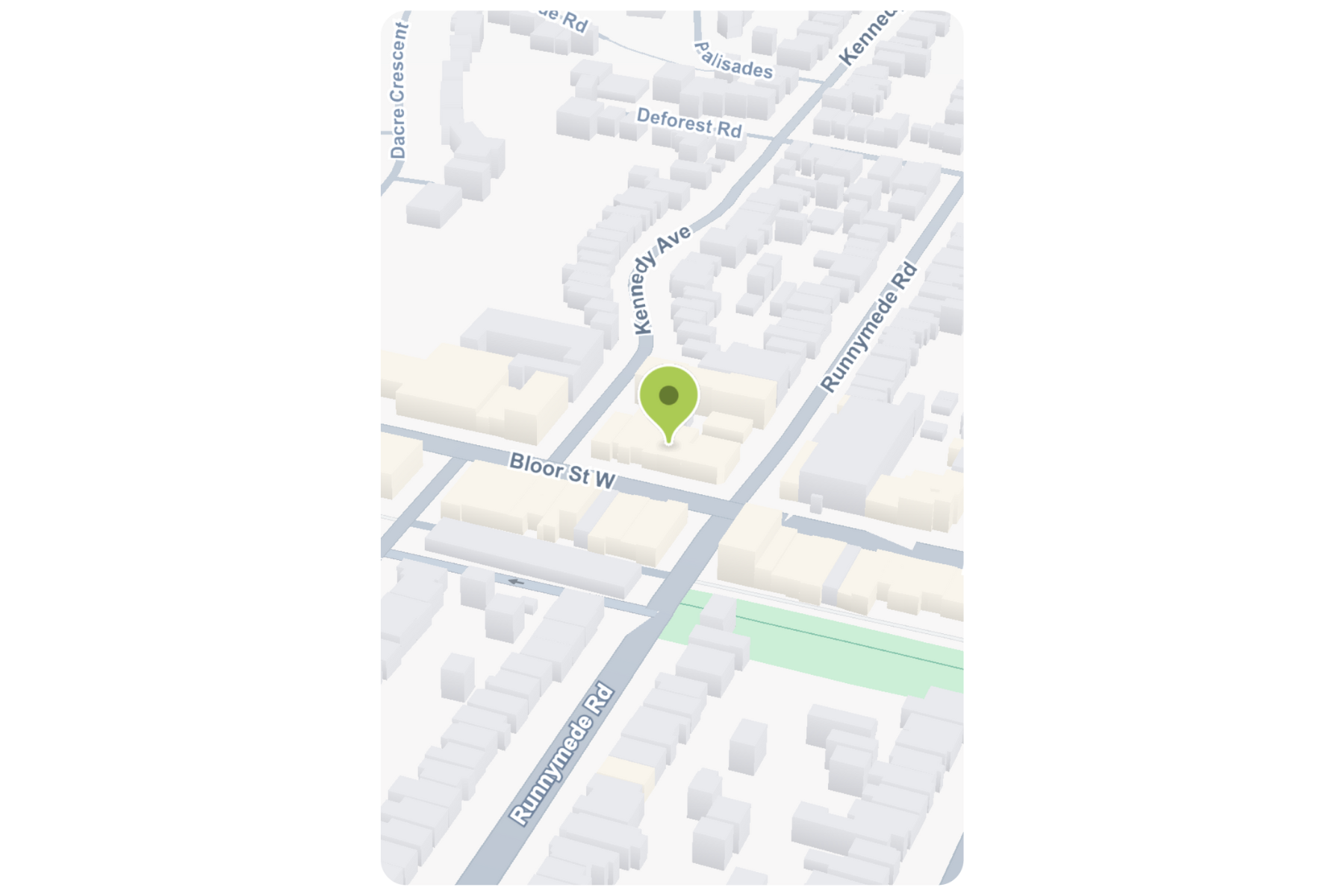

Address
2209 Bloor St W Suite 205
Toronto, ON M6S 1N5
Phone: (416) 546-4774
Fax: (416) 546-4778
Business Hours
Monday and Tuesday: 9:30 am - 6:30 pm
Wednesday and Friday: 9:00 am - 6:00 pm
Saturday by appointment only. No reception.
Sunday - closed.